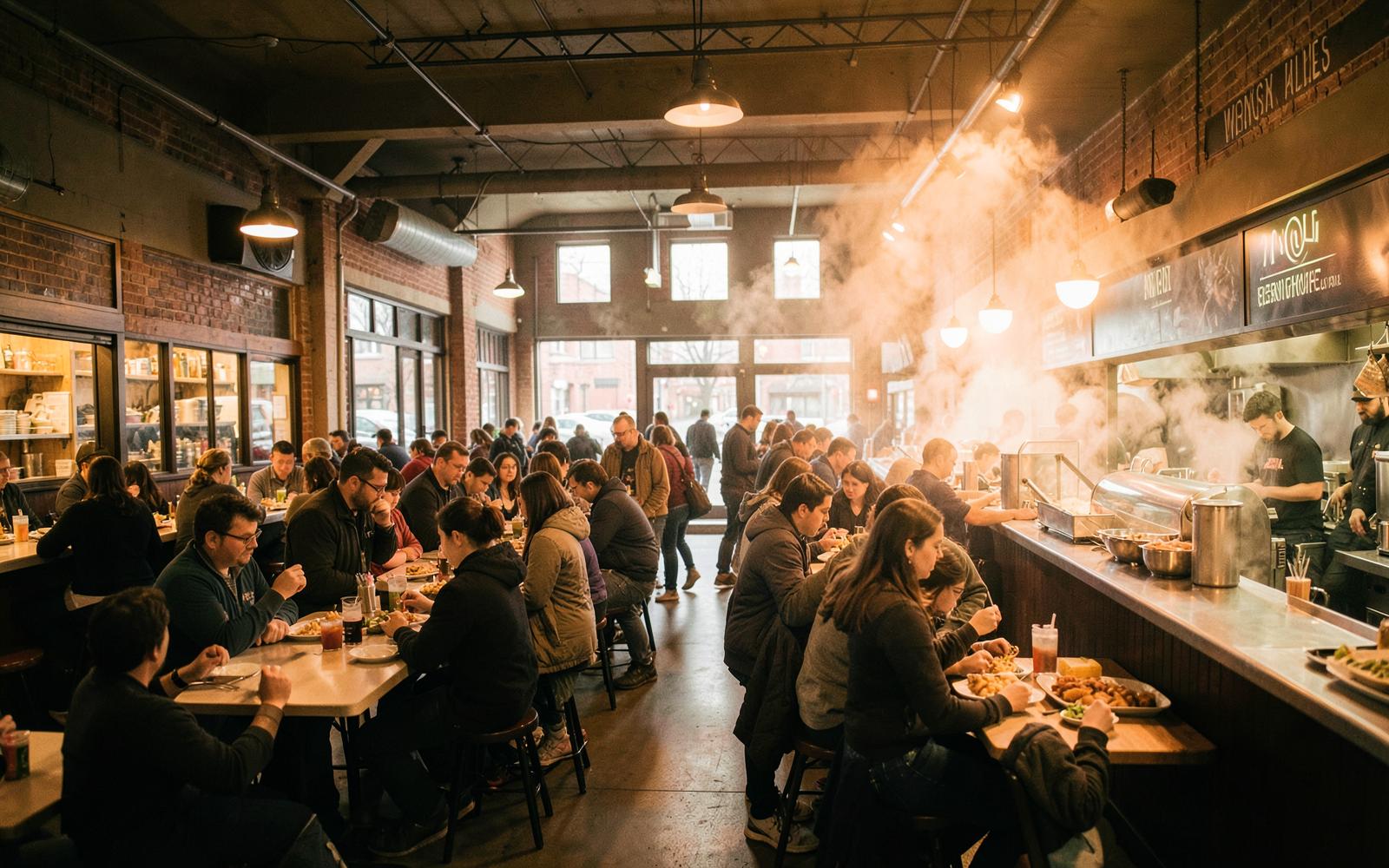
The room is full on a Wednesday, which the owner describes as good news and not, by itself, the relevant number.
Restaurant operators across Minneapolis report revenue at or above pre-2020 levels and margins well below them. The gap is the story, and it is composed of several costs that rose at once and have not come back down.
Food costs rose substantially and have plateaued at the higher level. Labor costs rose more. Minneapolis has a citywide minimum wage above the state figure, which operators generally support in principle and account for precisely in practice, and wage pressure above the minimum has been at least as significant.
Insurance, utilities and rent have each risen faster than menu prices, and menu prices have risen enough that operators report approaching a psychological ceiling.
"There is a number where people stop ordering a second drink," one owner said. "We found it. It is not a cliff. It is a slope, and you feel it in the average check before you see it in the door count."
Third-party delivery is a second squeeze. Commissions commonly run in the high twenties as a percentage of order value, which for most restaurants exceeds the entire margin on a dine-in ticket. Operators describe delivery as a customer acquisition cost they cannot decline.
Several have responded by building their own ordering systems, with modest success — a small share of customers switch, and the platforms retain the rest through habit and search placement.
Staffing has stabilized relative to the acute shortages of 2021 and 2022, with a structural change: the pool of career line cooks is smaller, and turnover assumptions that were built into kitchen management for decades no longer hold.
Some operators have responded by restructuring the job: fewer positions at higher wages, shorter menus that require less prep, four-day schedules. Those that have done so report improved retention and reduced flexibility.
The businesses that appear most durable share a pattern. They own their building or hold a long lease. They have a limited menu. And they have a second revenue line — a bakery counter, a retail case, a catering arm — that uses the same kitchen at a different hour.
"A dining room is an expensive way to use a kitchen for four hours a night," the owner said. "Everything we have added is about the other twenty."