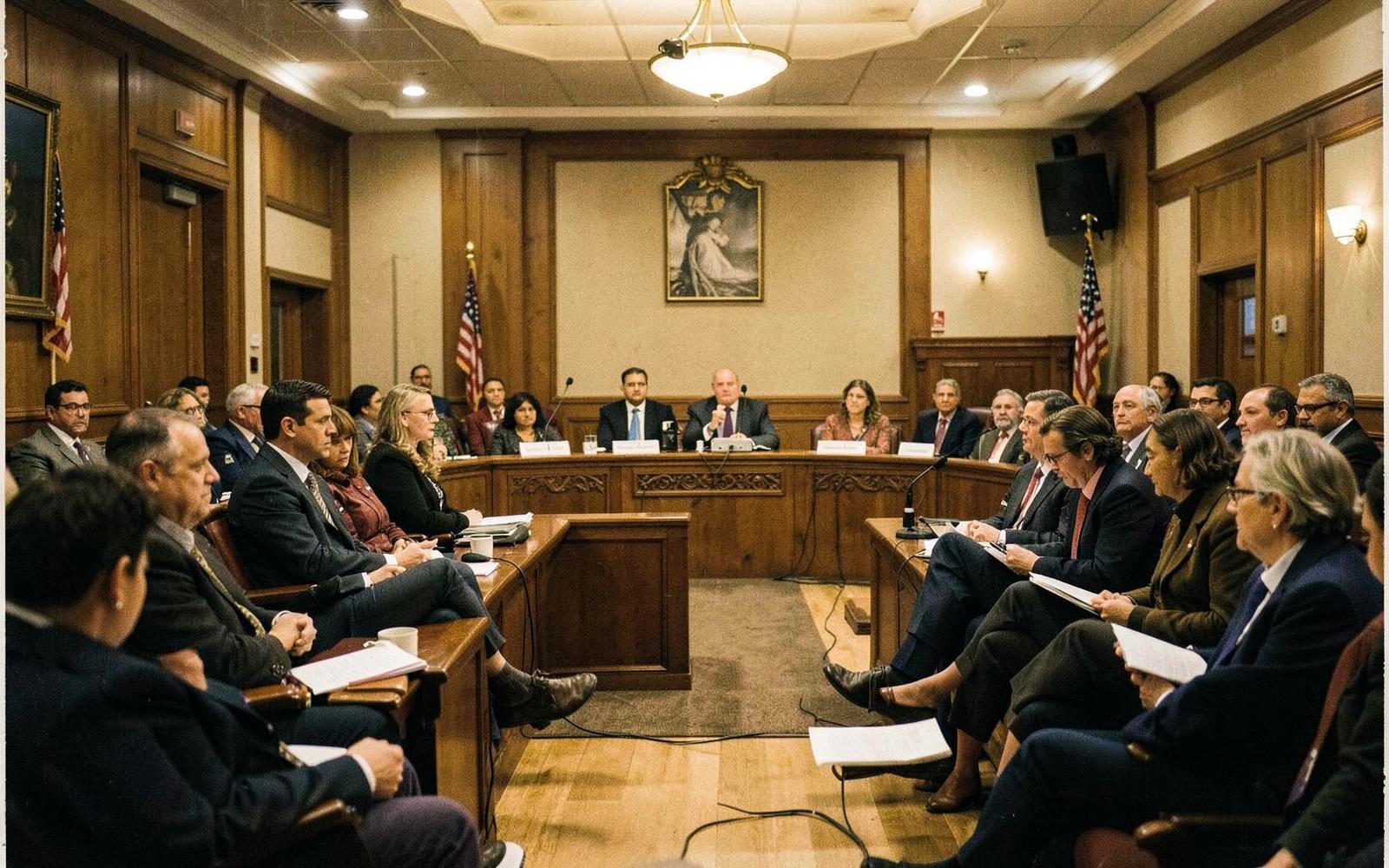
Two years ago the Minnesota Legislature spent a historic surplus. The forecast released in February will show something closer to a structural gap, and the session that follows will be defined by which commitments survive it.
The arithmetic is not mysterious. Several of the programs enacted during the surplus years — expanded child tax credits, universal school meals, paid family and medical leave — were funded with ongoing obligations against revenue that was, in part, one-time. The out-year costs were disclosed at the time and discounted by nearly everyone.
"We knew the tails," a senior DFL senator said. "We decided the programs were worth the fight we are about to have. I still think that. It is going to be an unpleasant spring."
Republicans, who hold a narrow minority in one chamber and near parity in the other, have signaled that they will not supply votes for revenue increases and will press for reductions in the newest programs first. That sequencing is contested: the newest programs are also the most popular, and school meals in particular poll well across party lines and geography.
Paid family leave is the larger fiscal question. The program is funded by a payroll premium and administered by a new state division, and its early claims experience will determine whether the premium rate holds. Actuarial estimates have been revised twice.
Health and human services, as always, is where the real money is. Medical assistance costs have grown faster than the forecast in each of the last three quarters, driven by long-term care and by pharmaceutical spending that the state has limited tools to influence.
Education funding is formally protected by an inflation-indexing provision adopted in 2023 — the first such guarantee in state history, and now the single largest driver of projected spending growth. Repealing the index is discussed privately and defended publicly by almost no one.
Local governments are watching aid formulas. Local government aid, the mechanism that transfers state revenue to cities, has historically been the first item reduced in a tight year, and Minneapolis and St. Paul are its largest recipients. City budget officials have already begun modeling reductions.
There is a transportation question as well. The 2023 package tied several funding streams to metropolitan sales tax revenue, which has come in below projection.
Legislative leaders in both parties describe the coming session in the language of triage, which is itself a signal. In surplus years, the argument is about which new things to do. In shortfall years, it is about which existing things to stop, and every one of them has a constituency that showed up to ask for it.
The session convenes in February, days after the forecast lands.