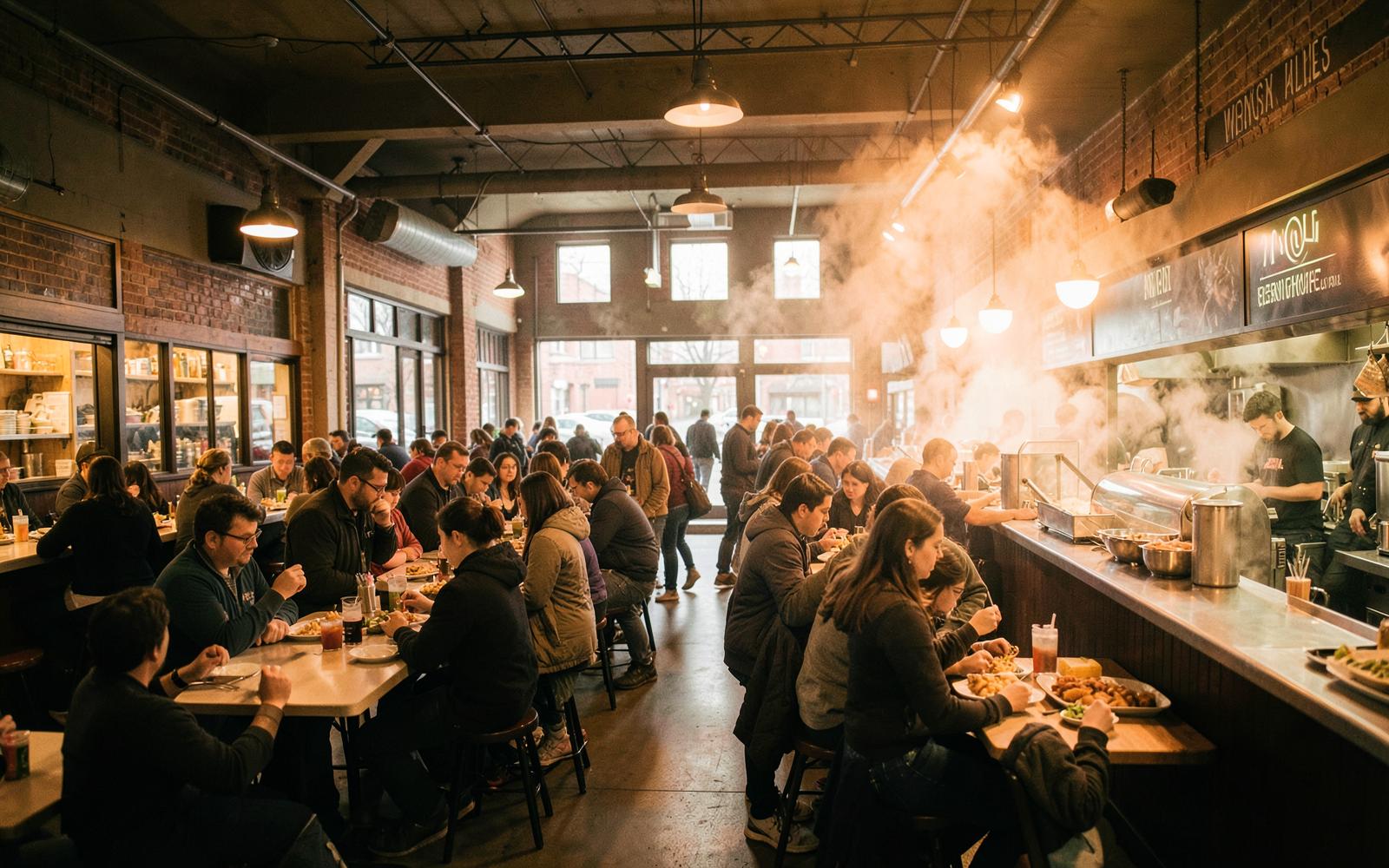
The clearest way to understand thirty years of Minneapolis food is to walk through a market hall on a Saturday and count the number of cuisines represented by businesses with fewer than five employees.
The Twin Cities absorbed successive waves of immigration — Hmong refugees beginning in the 1970s, Somali families from the 1990s, Mexican and Ecuadorian communities along the Lake Street corridor, Ethiopian, Eritrean, Liberian and Karen households since — and the food economy changed accordingly.
What distinguishes the Minneapolis version of this familiar American story is the institutional scaffolding. The region's market halls, incubator kitchens and public market structures gave small food businesses a path from home cooking to storefront that most cities lack.
A vendor can rent a stall for a fraction of a restaurant lease, test a menu, build a following and graduate. Dozens have.
The Hmong-owned farming operation is the most striking case. Hmong growers make up a substantial share of vendors at metro farmers markets, in some cases a majority, and the produce they grow — bitter melon, long beans, Thai chilies, greens with no English name in common use — reshaped what those markets sell.
That did not happen through a program. It happened because families with agricultural knowledge acquired land access, often marginal parcels at the metro edge, and did the work.
Somali restaurants along Lake Street and in Cedar-Riverside serve a cuisine that most non-Somali Minnesotans still encounter rarely — a fact several restaurant owners find puzzling given the length of the shared residence.
"Twenty-five years," said an owner whose restaurant has operated since 2003. "People who live six blocks away have never eaten here. They are not hostile. They just never thought about it."
The barrier appears to be less cultural than structural: many of these restaurants do not appear on delivery platforms, do not advertise, and rely on community word of mouth that does not cross neighborhoods.
The newer generation is changing that. Second-generation owners have opened businesses that translate family cooking for a broader audience, and several have won significant national recognition.
Older operators watch with mixed feelings — pride, and the observation that the recognition arrived a generation after the cooking did.