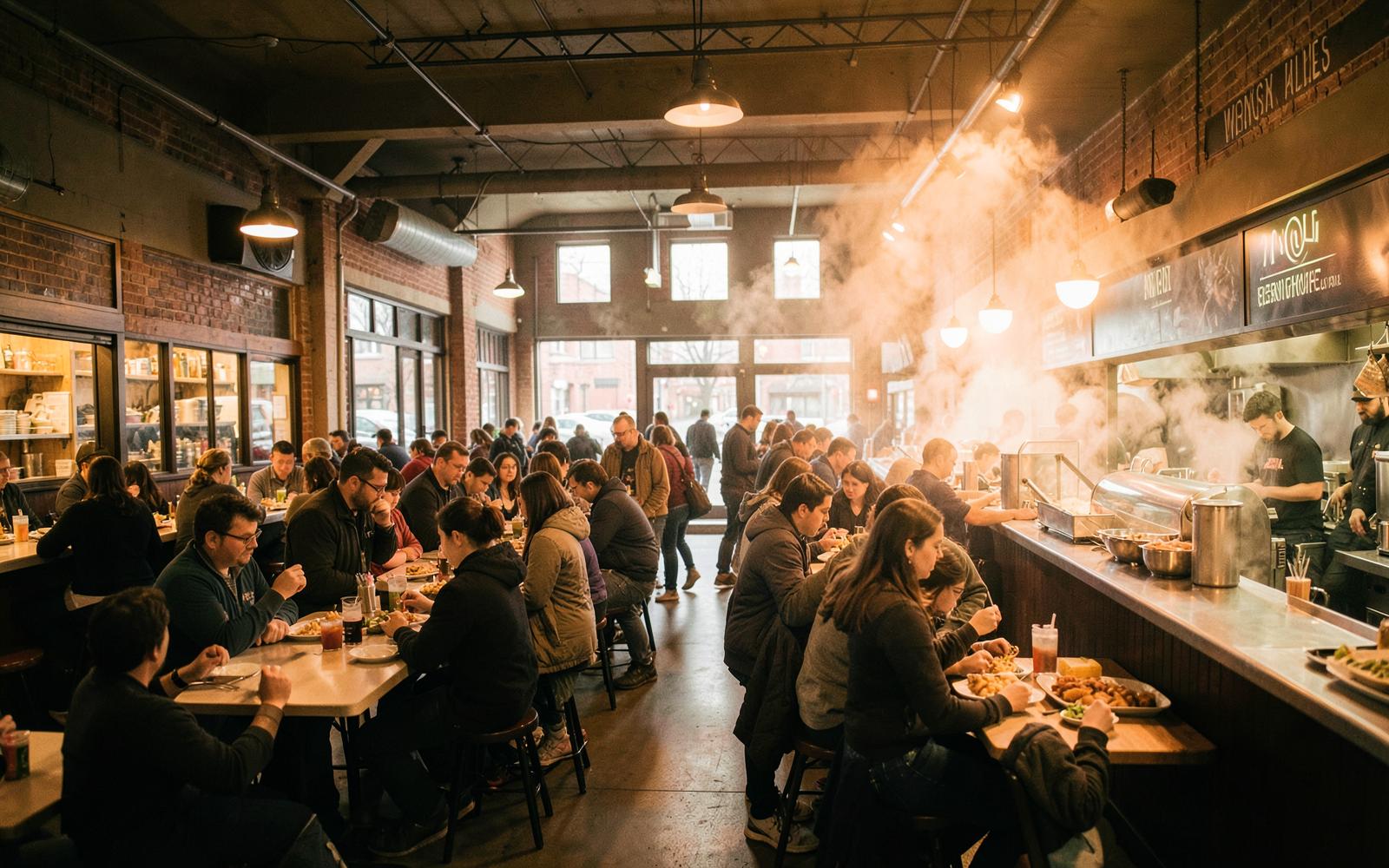
The trading floor closed years ago. The building remains, the contract remains, and the function the exchange performed for more than a century continues in a form that generates no photographs.
Minneapolis became a grain city for reasons of geography: the falls provided power, the railroads provided reach, and the northern plains grew a wheat variety — hard red spring — with a protein content that made superior bread flour. The exchange existed to price it.
That price is still set here, in the sense that matters. The hard red spring contract remains the global benchmark for high-protein wheat, and bakers, millers and farmers from Saskatchewan to North Africa reference it.
What changed is the mechanism. Open outcry ended in 2008, and the contract now trades electronically under the ownership of a larger exchange group. The pit's collapse was less dramatic locally than the equivalent events in Chicago, largely because Minneapolis had already become a back-office city for the trade rather than a floor city.
The grain business that remains here is substantial and nearly invisible. Two of the largest private agricultural trading firms in the world maintain major operations in the metropolitan area. Their combined revenue exceeds that of most publicly traded companies headquartered in the state, and almost nobody outside the industry can name their executives.
This invisibility is partly by design and partly a function of what the business is: logistics, risk management, arbitrage across geography and time.
Farmers experience the system through the basis — the difference between the local cash price and the futures price — which reflects transportation, storage and local supply. Basis levels in western Minnesota have widened in recent seasons, a signal of rail capacity constraints more than of global demand.
Rail is the perennial complaint. Grain competes with other freight for the same northern corridors, and in years when other commodities pay better per car, grain waits.
The exchange building itself has been converted to offices and event space, with the old floor preserved. Retired traders occasionally hold reunions there, in a room that was once the loudest in the state.
The wheat still moves. It is priced in a data center in New Jersey, on a contract designed in Minneapolis in 1881.