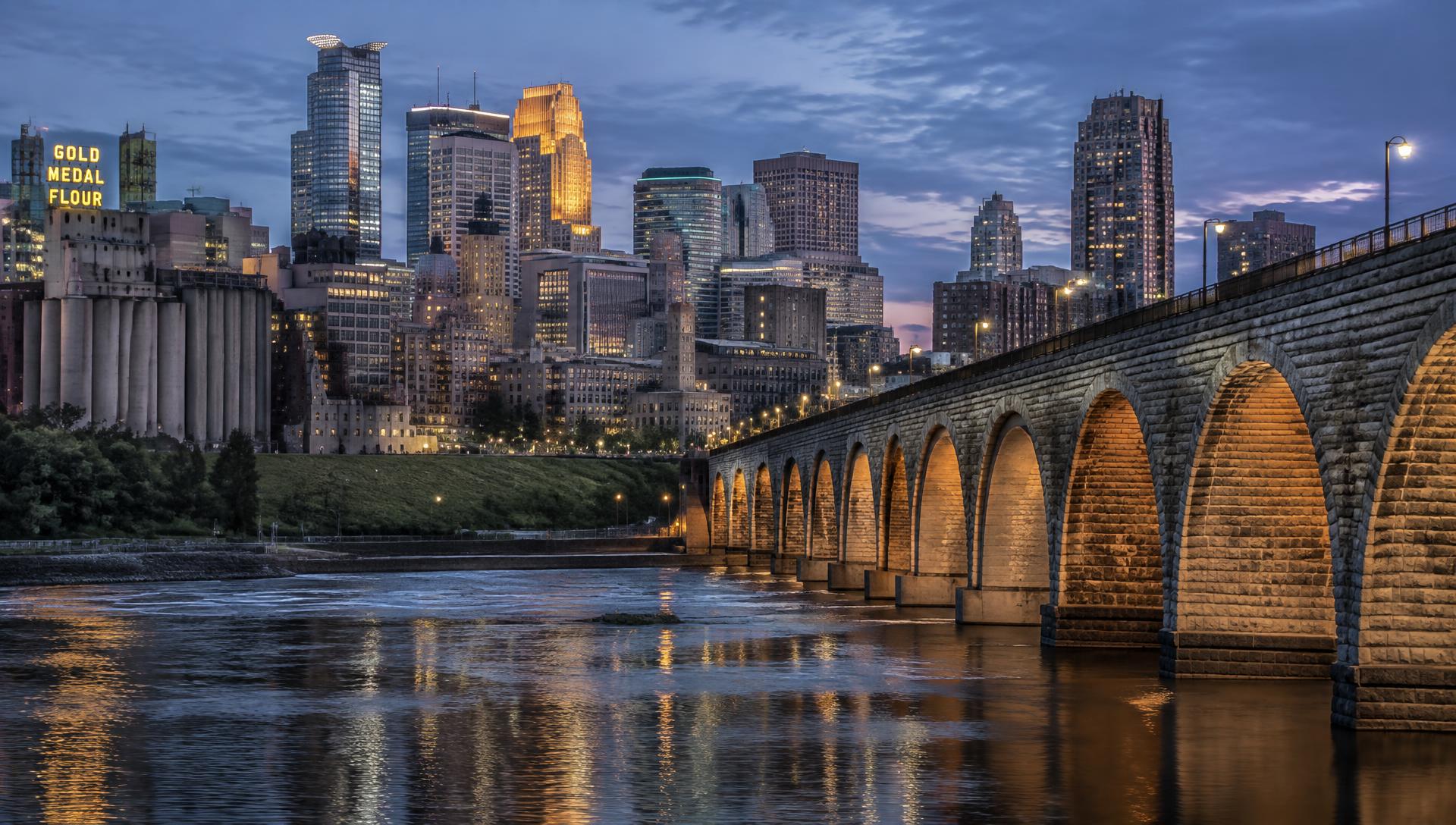
On the evening of May 2, 1878, a spark inside the Washburn A Mill ignited the flour dust suspended in its air. The explosion destroyed the largest flour mill in the world, killed eighteen workers, leveled five adjoining mills and was heard ten miles away.
The mill had been built to exploit the only major waterfall on the Mississippi River, the power source that made Minneapolis possible. In the decades before the explosion, milling had transformed a settlement at a set of falls into an industrial city.
Flour dust is explosive at concentrations easily reached inside a working mill, a fact not well understood at the time. The industry's response after 1878 was systematic: ventilation systems, dust collection, and the elimination of the millstones whose friction generated both heat and dust.
Their replacement was the middlings purifier and the roller mill, adapted from Hungarian practice. The new equipment was safer and, critically, better suited to the hard spring wheat grown on the northern plains — a variety whose high protein produced superior bread flour but had resisted the older milling technology.
The rebuilt Washburn A Mill reopened in 1880 and operated for nearly eight decades. By the 1880s, Minneapolis milled more flour than any city in the world, a position it held for half a century.
The consequences radiated outward. The rail network that carried the flour east made Minneapolis a distribution center. The financing of grain purchases built the banks. The companies that emerged — names that remain on packages in every American grocery store — became the corporate base that shaped the city's civic culture for a century.
The falls themselves were nearly destroyed in the process. Aggressive tunneling beneath the limestone cap in the 1860s caused a collapse that threatened to erode the falls into rapids. An emergency federally funded apron of concrete stabilized them, and the natural falls exist today only in the sense that the water still drops.
Milling left Minneapolis gradually through the twentieth century as rail rate structures changed and production moved closer to consumers.
The Washburn A Mill burned again in 1991, long after its abandonment. Rather than demolish the ruin, the state historical society built a museum inside the surviving walls, with the burned interior left visible.
It is, as industrial monuments go, unusually honest. The building is presented as what it is: a partially destroyed factory where men died making flour, at the center of a city that exists because of it.